Tag: Jews of Płock

The Feinberg family

The Feinberg family

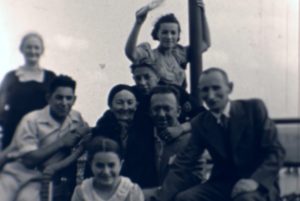
Brana Libka (Ludwika) Kempner was born on February 16, 1873, in Płock, to Ludwik, a bookstore and printing house owner, and his wife Tauba née Kon. In 1897, she married Izaak Feinberg (born 1867), a doctor of medicine from Nieśwież, the son of Szmul and Chaja […]

8th year of JewishPlock.eu – support our initiative!

8th year of JewishPlock.eu – support our initiative!

JewishPlock.eu is entering its eighth year! Family albums, biographies, places connected with the Jewish community of Płock, films, exhibitions, databases, and online projects through which we aim to commemorate the history of Płock’s Jews. You will find all of this on our website, which was […]

“For you, unforgettable…” Exhibition on the 85th anniversary of the deportation of Jews from the Ghetto in Płock

“For you, unforgettable…” Exhibition on the 85th anniversary of the deportation of Jews from the Ghetto in Płock

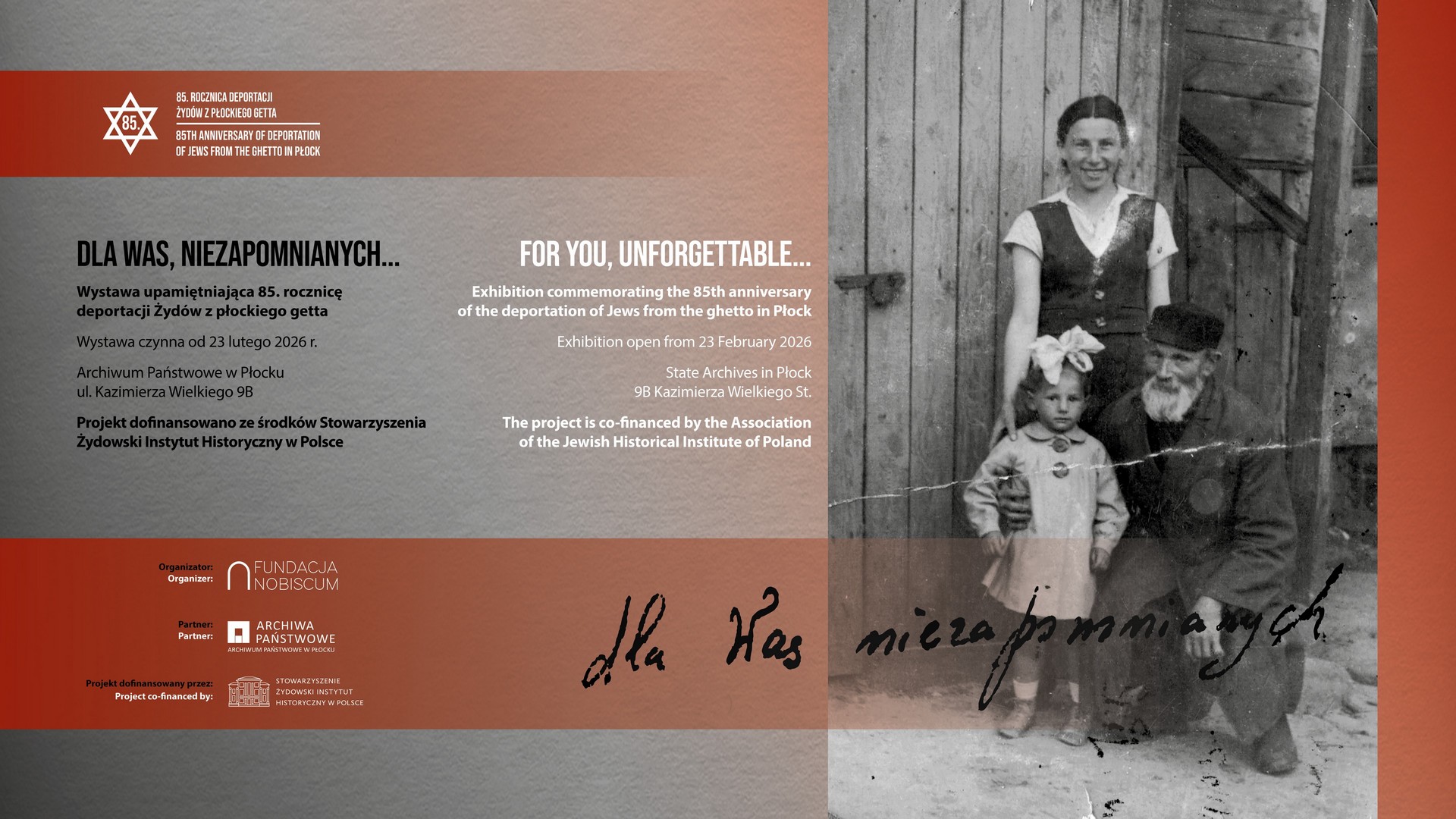
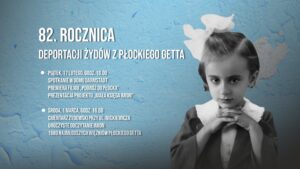
The Nobiscum Foundation invites everyone to the exhibition “For you, unforgettable…” commemorating the 85th anniversary of the deportation of Jews from the Ghetto in Płock.

The exhibition opening will take place on Friday, February 20th, at 12:00 PM at the State Archives in Płock, 9b Kazimierza Wielkiego Street. The program includes a concert of Jewish songs performed by Radek Polakowski of the band Sztetl. As part of the event, we are also preparing a commemorative brochure and a new database on our website, JewishPlock.eu.

The exhibition will be open to visitors during the opening hours of the State Archives in Płock from February 23rd, 2026.

The partner of the project is the State Archives in Płock.

The exhibition project was co-financed by the Association of the Jewish Historical Institute of Poland.

The brochure is published thanks to the support of the Forum for Dialogue.

Important note: due to the limited number of places, the exhibition opening is an invitation only event – please contact us at the following email address: gabriela.nowak@fundacjanobiscum.eu

“For you, unforgettable…”

The exhibition “For you, unforgettable…”, prepared by the Nobiscum Foundation, presents and commemorates selected Jewish families connected to Płock. It tells the story of the people who shaped our city. Here they studied, worked, raised children, lived here for longer or shorter periods, walked the streets, and shared the joys and worries of everyday life. Although sometimes little trace remains of them in archival documents, they still look at us from photographs preserved in the family archives of their descendants: Arieh Bomzon, Sandra Brygart Rodriguez, Helene Armand, Guy Shapira, Robert Winogron, Anat Geffen, Izzy Greenspan, Itai Vishnia, Amos Ber and Halina Hylander-Tureniec.

The bilingual, Polish and English board exhibition “For you, unforgettable…” will be accompanied by documents from the extensive collection of the State Archives in Płock, presenting the history of Płock Jews from 1939 to 1945, selected and prepared by Senior Curator Magdalena Młodziejewska. The Nobiscum Foundation has also prepared a commemorative brochure, supported by the Forum for Dialogue, which will be distributed on February 20-21. A new database, available on the JewishPlock.eu website, will feature the names and surnames of over 6,000 Płock Jews, compiled from archival documents from the World War II period.

Premiere of the guidebook “In the Footsteps of Adam Neuman-Nowicki” on 12 December

Premiere of the guidebook “In the Footsteps of Adam Neuman-Nowicki” on 12 December

The newest guidebook published by the Nobiscum Foundation will premiere on December 12, 2025. Gabriela Nowak-Dąbrowska’s book, “In the Footsteps of Adam Neuman-Nowicki,” is being published thanks to co-funding from the Municipality of Płock. We invite you to the premiere event on December 12th at […]

Nobiscum Foundation among the finalists of the 2025 POLIN Award competition

Nobiscum Foundation among the finalists of the 2025 POLIN Award competition

The Nobiscum Foundation is among the finalists of the 2025 POLIN Award! We are very grateful for the recognition of our work, and we are especially happy that among the finalists are people whose work we have known and admired for years! The finalists of […]

Yitzhak Gruenbaum and the Hazomir library in Płock

Yitzhak Gruenbaum and the Hazomir library in Płock

Yitzhak Grünbaum (1879-1970), a member of the Legislative Parliament and the Parliament of the First, Second, and Third Term of the Second Polish Republic, and one of the signatories of the Declaration of Independence of Israel, earned his place in Płock’s history as the initiator of the establishment of the first Jewish library in the town, also one of the first Jewish libraries in Poland.

Izaak Towie Altman, a journalist, writer, author of the book “Jeden dzień płockiego kupca” [“One Day of a Merchant from Płock”] and publisher of the newspaper “Dos Płocker Leben,” wrote in his memoirs about Yitzhak Grünbaum’s role in establishing the library:

Some of the group of students, involved in the national movement and studying in the upper grades of a Russian middle school, established the first Jewish library in Płock. Among these students was one who can rightly be considered the driving force behind the entire endeavor. Serious, energetic and dedicated to the cause, he worked for it more than anyone else, dealt with its problems and served as an example to others through his activities, thanks to him more and more came and helped to implement his idea.

The meeting at which the decision was made to establish a Jewish library in Płock took place in the private prayer house of Towie Fiszman, who also expressed his willingness to submit an application to the authorities for permission. At that time, under the tsarist regime, obtaining permission to open a library, especially a Jewish one, was not an easy task – a library could only be legalized as a private enterprise, in the name of someone above any suspicion. The meeting was organized by Aron Beker, one of the later founders of the Jewish Secondary School Association in Płock, and Yitzhak Grünbaum, who in his address to the audience mentioned, among others, the students of the Beth Midrash, “seeking a new way of life, to whom the library and its books should come as aid.” During the meeting, a Zionist association was formed under the name Mazkeret Shmuel (in honor of Rabbi Shmuel Mohilever, the founder and ideologist of religious Zionism).

After Towie Fiszman’s application was approved, work began on opening the library and organizing its collection. Books were donated by private individuals, including Icchak Grünbaum himself, who shared his publications in Hebrew, as well as books from the former collection of the Płock library, which operated under the auspices of the “Kałakotka” Association for Science and Reasonable Thinking. Płock residents remember Grünbaum as someone who would go door-to-door, present his case, approach bookcases, search for items of interest, and ask for donations. Mordechaj Koszerkiewicz, a locksmith and worker at the Sarna factory, was also one of the library’s most active organizers.

The library, which eventually received the name Hazomir, meaning “songbird” in Hebrew, became an important cultural resource for Płock’s youth, who could read and absorb knowledge there, as well as a center for discussions and meetings. There was a reading room at the library – one of the oldest reading rooms in Płock.

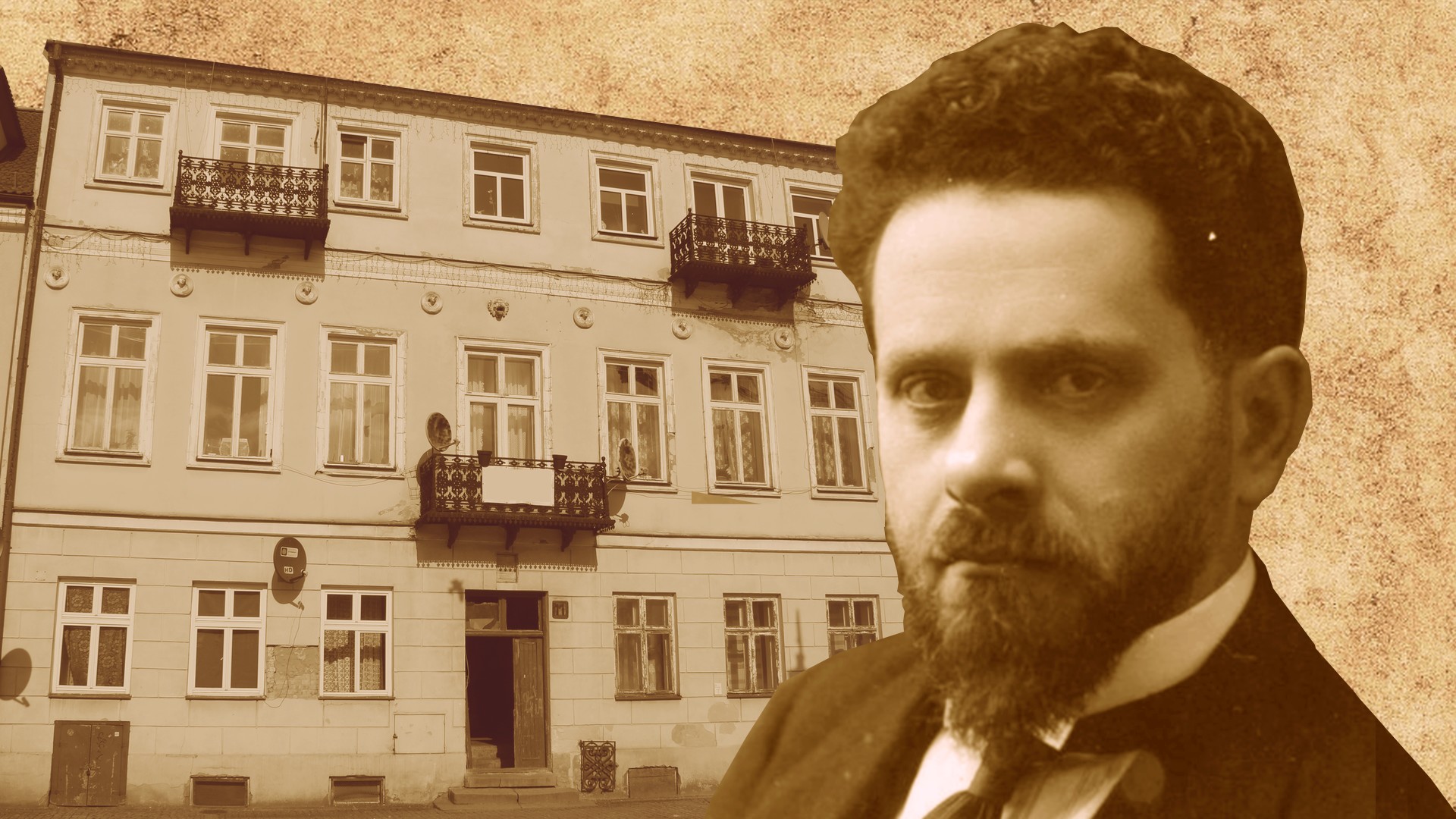
For many years, the Hazomir Jewish Library was located in a house at 11 Old Market Square. The Hazomir Jewish Musical, Literary, and Dramatic Association, founded by Mendel Szlossberg, Izaak Towie Altman, and Herman Minc, also operated here.

On November 17, 1926, celebrations took place to mark the 30th anniversary of the Hazomir Library. A ceremony was held at the municipal theater with the participation of Yitzhak Grünbaum, an anniversary book was published, and, in addition to Grünbaum, Izaak Towie Altman, Aron Beker, Mordechaj Koszerkiewicz, and Jakub Józef Bursztyn were appointed honorary members of the library.

As noted in the 1936 issue of the “Bibliotekarz” magazine, the Hazomir library had a collection of 6,215 volumes at that time. Fiction and scholarly works in Polish numbered 3,169, Yiddish fiction 2,066, and Hebrew 980. Its 350 members, mostly young people, used to borrow 50 books daily. The total number of borrowed books during the year was 15,000.

Before the war, the Hazomir library was located at 5 Grodzka Street.

Yitzhak Grünbaum visited Płock again after the end of World War II. He attended a meeting of the Jewish Committee and visited the former Jewish district.

Borys Kowadło

Borys Kowadło

Borys Kowadło – photographer, was born on December 2, 1911 in a house at 4 Bielska Street, in the family of Dawid and Ruda nee Asz. His father was a ritual slaughterer. Borys Kowadło was a student at the photo studio of his brother-in-law Abram […]

Icek Bernsztajn

Icek Bernsztajn

Icek (Izaak) Bernsztajn – lawyer, teacher and publicist, was born on November 13, 1899 in Płock (in the house at 15 Kwiatka Street) in the family of Tobiasz and Sura. In 1918, he entered the seventh grade of the Philological Middle School of the Men’s […]

Yaakov Guterman

Yaakov Guterman

Yaakov (Jakub) Guterman – painter and illustrator, born in 1935 in Warsaw, the son of Simcha and Ewa née Alterowicz. His hometown is Płock, where he lived with his parents in a one-story house at 64 Sienkiewicza Street. Jakub’s father ran a knitting workshop and was also one of the co-founders of the Płock branch of the Frajhajt organization. On March 1, 1941, the Guterman family, together with other Jews from Płock, were deported to the camp in Działdowo. The Gutermans spent the following years of the war wandering around various towns and villages, hiding thanks to Aryan papers. Jakub Guterman spent the last months of the war in the village of Zawady near Łowicz. Simcha Guterman died in the first days of the Warsaw Uprising. Jakub and his mother returned to Płock. He finished primary school here, for one year he attended the Władysław Jagiełło High School. In 1950 he emigrated with his mother and stepfather to Israel. He studied literature at the University of Jerusalem and art at the Avny Institute in Tel Aviv. He lived in kibbutz Ein Harod, then (to this day) in Ha-Ogen. For forty years he taught literature in high school and worked as a book illustrator (his artistic output includes over 170 books). He was also a graphic editor of weeklies for children, published poems and translations, including Polish poetry.

Guterman and Alterowicz family

The house at 64 Sienkiewicza Street in Płock in the register of historic monuments!

Alfred Blay

Alfred Blay

Abram Hersz aka Alfred Blay was born on May 30, 1876 in Płock. His father Natan (1839-1915) came from Kalisz. His mother was Estera née Landau (1845-1928), daughter of Icek Tobiasz and Małka. Alfred Blay had three siblings: brother Szmul Tobiasz (1868-1899) and sisters Hinda […]


error: