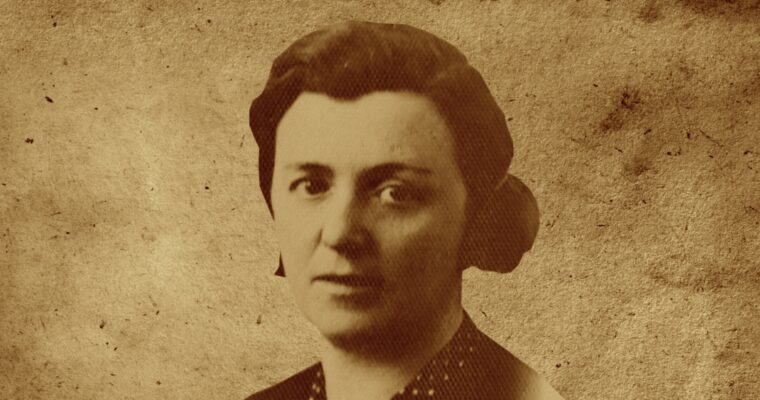
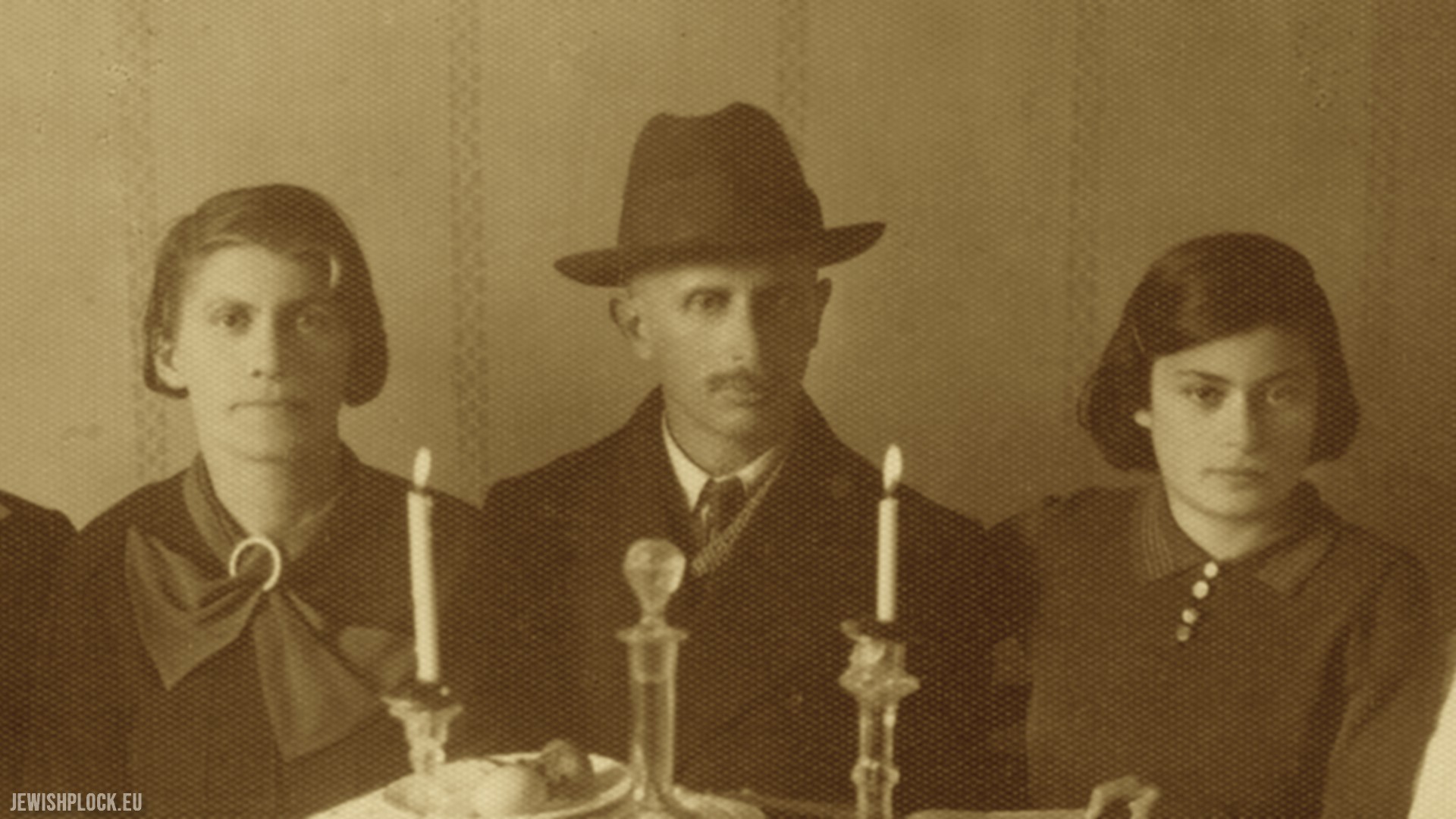
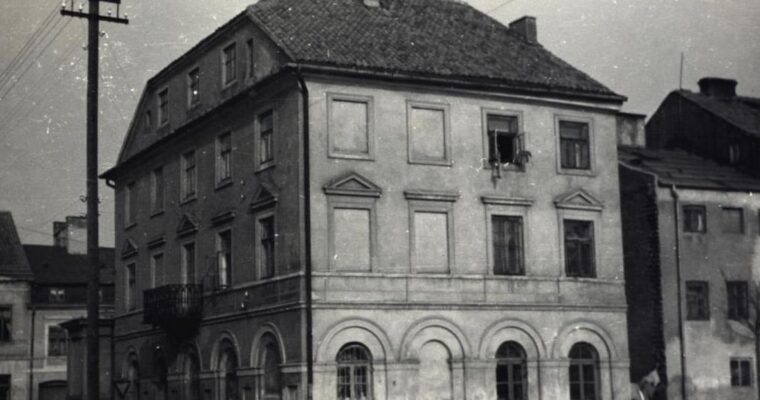
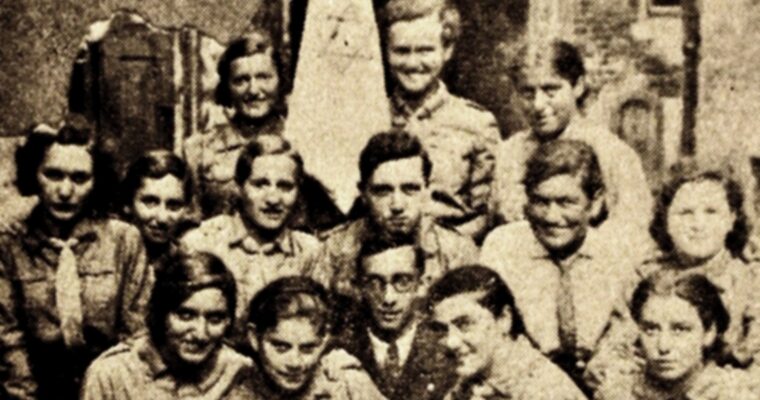
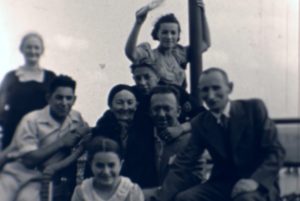
Chaja Sura (Ilana) Szlachter was born on August 29, 1918. Polish and Yiddish were spoken in her family home. Her mother, Estera, came from a village located 20 kilometers from Płock. She was a beautiful woman with jet black hair and almond eyes – she was called “Beautiful Ester”. Her father Chaim Szymon worked as a harvesting machine painter in the factory of Izydor Sarna, later as a room painter. From the age of 12, Chaja Sura helped her father at work – she carried a ladder, buckets of paint, painted rosettes on ceilings and signboards for farming carts. The Szlachter family lived at 22 Szeroka Street, and before the outbreak of World War II – at 8 Synagogalna Street. Chaja Sura attended a kindergarten for children of former soldiers, and then a kindergarten run by Michaela Hazan nee Baran. She continued her education at the General School No. 8 for Jewish children, then at the Regina Żółkiewska Middle School. There was a large pond in the school park, covered with a thick layer of ice in winter – Chaja Sura used to go skating there twice a week with her friends. She belonged to the Communist Youth and International Red Aid, she wrote poems. After graduating from middle school (in May 1938), she attended the Konarski Pedagogium in Warsaw.
In the first days of World War II, her family decided to leave Płock and evacuate to Gąbin. Here they found shelter with an elderly man, but then the town was bombed (the victims included Chaja Sura’s uncle – Eliasz Szlachter). From Gąbin they went to Gostynin, from there they returned to Płock. They spent a few days on the banks of the Vistula River waiting for the ferry (the bridge had been already bombed at that time).
Memoirs:
Within a dozen or so days, the face of the town has changed. Round-ups, beatings and cutting beards began. The Germans beat my father as he was walking home with two buckets of water. I was forced to work in the Gestapo kitchen, peeling potatoes. At the end of September, I left Płock.
Chaja Sura went to Swisłocz, where her uncle Meir Szlachter lived. However, she decided to return to Płock to her parents and siblings.
There was a round-up in Płock. I walked home through the side streets. The people I met greeted me like a heroine, and my mother cried and couldn’t calm down. And everyone cried for me. There was a reason: my hair in the color of chestnut was divided by two gray strands a few centimeters long.
On November 20, Chaja Sura with her family and fiancé left Płock and went to Swisłocz. She got a job in the settlement of Hniezno near Wołkowysk as a teacher. She enrolled at the University of Vilnius and was to begin her studies in the fall of 1940. On June 30, 1940, along with other school teachers, she was taken to the train station in Wołkowysk. Through Wołkowysk, Słonim, Baranavichy, Minsk, Orsza, Smolensk, Moscow, Jarosławl, Wołogda, Toćma and Uściug, she reached a workers’ colony, the so-called “Thaellmann lesopunkt”. She worked in felling pines, removing bark, and then burning branches. Famine and typhus were common in the colony. The bread was distributed on basis of ration coupons, and once a day she was entitled to a portion of pearl barley. She left this place with her husband in the fall of 1941. They lived in the “Awangard” kolkhoz on the banks of Suchona river. Every day Chaja Sura walked across the frozen river to the town of Niuksienica, where the House of Culture and the well-stocked library were located. In January 1942, she and her husband were referred to the Polish Army.
Let’s go then. 2 loaves of bread we got for a sold pillow, an axe and a pot – all our luggage. 280 km to Kotlas on foot – 7 days, 40 km a day. […] From Kotlas, the road led to the army. The journey lasted 6 weeks. Our wagon – a ‘tieplushka’ (a heated cargo wagon), totally crowded […] The train stopped every hour or two for people to rest. It was never known when or where we would be. We go through Kirov, through Świerdłowsk, Azbest, Czkałow – to Arysia. Here we were informed that there were no more troops in Buzeluk and we were all sent to the Republic of Tashkent. And so we were again on the trail: Guzar, Kermine, Kenimech…
Chaja Sura’s husband was admitted to the army, and she was sent to Jange Julu, 80 km from the town of Guzar.
Turtles saved us. I was a specialist in finding them, and Stefcia made an excellent soup out of them. We thought we were in Paris. At first we ate turtle meat with disgust, then we developed a taste for it. You get used to everything except hunger. […] One day, hunting turtles, we accidentally found ourselves near a devastated palace. One of the rooms, on the height of 2 meters or so, was covered with a fabric. Nice, patterned gray and black linen upholstery. […] We stripped the walls, washed the fabric, cleaned it of the pieces of lime and sewed a dress, 2 skirts and blouses for each of us. […] What a great feeling it was!
Chaja Sura left Russia for Iran, and from there to Pakistan and Palestine. At that time, her husband was in Italy (he was wounded at Monte Cassino). Chaja Sura was accommodated in Beth Hechalutzot, she got a job in the “Haargaz” factory, then in the artificial teeth factory in Nachlath-Icchak. In the fall of 1944, her husband came from Italy. For some time they worked in the Shafaim kibbutz. In 1945 her husband decided to return to Poland. After the war, she lived in Poland for 12 years, initially in Płock, where she worked in a Jewish dormitory. She left Poland on July 22, 1957.
(Based on the memories of Ilana Szlachter (Wojtkowska) entitled “Zwykłe życie” [“Ordinary life”], Bulletin of the Jewish Historical Institute No. 1/2 of 1998, pp. 106-116)
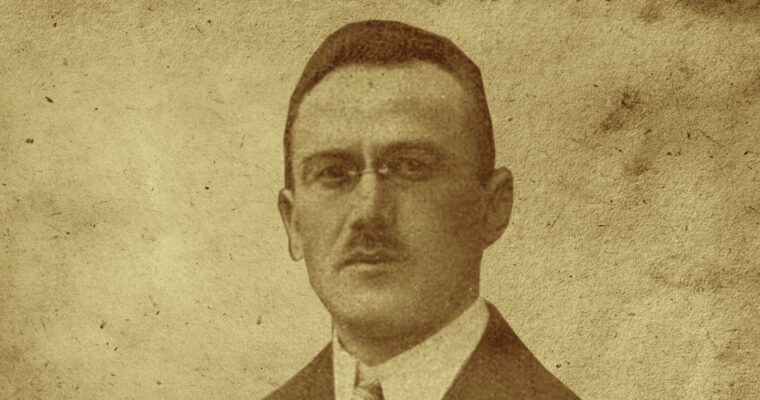
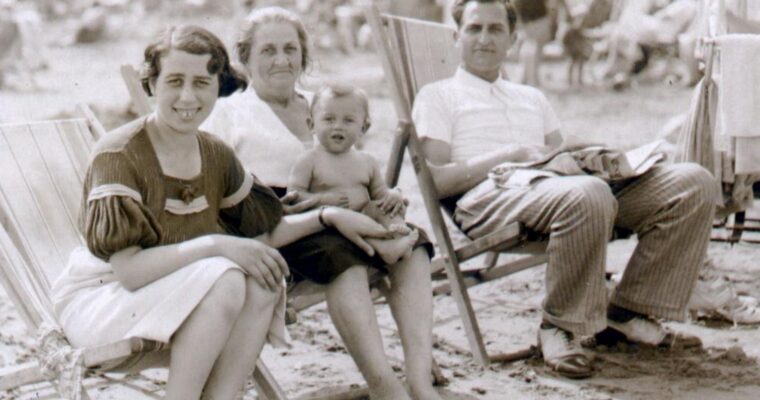
Bella Lerman was born on May 20, 1917 in Płock. She graduated from a 7-grade elementary school for Jewish children. After the outbreak of the war, her family decided to move to Lviv, where they stayed until the outbreak of the German-Soviet war in 1941. On September 18 this year, the Galician governor, Karl Lasch, issued a decision to establish a Jewish district (other sources mention September 7, October 8 or November 8). The Jews were to move to the ghetto by December 15, 1941.
Bella Lerman:
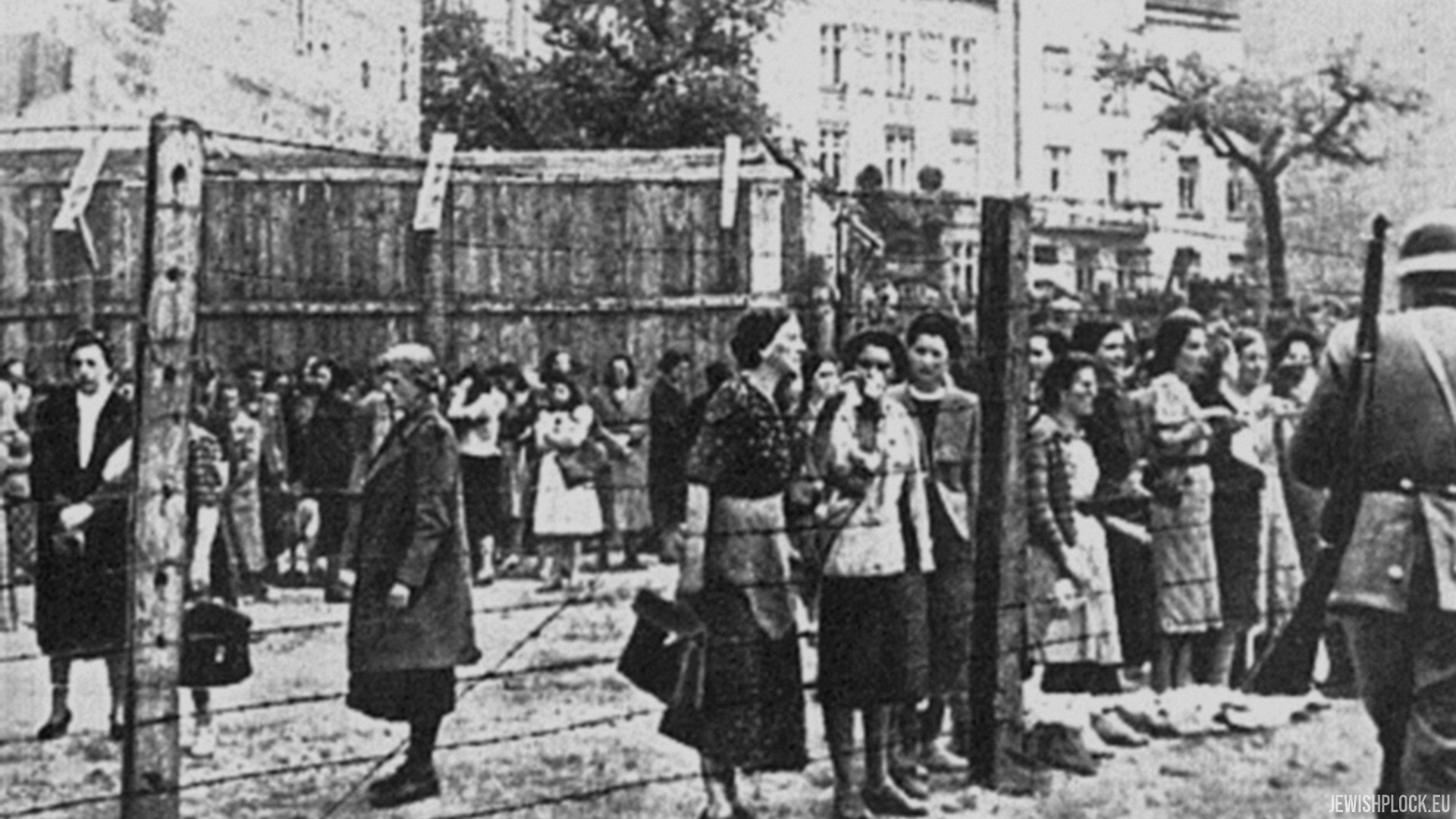
In December 1941, we had to leave our apartment, we moved to the Jewish district at 17 Rappaporta Street. In March 1942, the Gestapo searched us thoroughly (at that time they constantly searched all Jewish apartments), they turned the whole apartment upside down and they ordered the women to jump up with their legs and arms outstretched, surely thinking that in this way they would find precious objects hidden by us.
In March 1942, a deportation took place in the ghetto. As a result, about 15,000 people lost their lives in the death camp in Bełżec.
Bella Lerman:
The first big action against Jews took place in March. My foster parents had certificates that protected them against displacement. I had nothing, I had to hide in the basement. One day I heard the Germans searching the neighboring cellar. I decided to leave the house. Pretend to be working. It was a good idea, because the Germans took all those hiding in the basement, somehow they did not come to the apartment. That March action resulted in many victims and lasted about a week.
Another such action was carried out on June 24 this year. From 5,000 to 8,000 people died then.
Bella Lerman:
In June, one Wednesday at noon, unexpected action broke out. Without feeling anything, I went to Kleparów district to get soup for us, because we lived in very difficult conditions. On my way, I was stopped by a Ukrainian policeman and asked for a work certificate. Somehow he did not like my certificate […]. When he identified another woman with a child, I managed to escape and this saved me, because those taken in this action were killed in the Janów camp.
On August 10-29, 1942, the so-called “Great Action” took place.
Bella Lerman:
The action began on August 9-10, 1942. On August 14, SS men and Ukrainians came to our house. My brother did not have time to hide. The hiding place was smashed by the SS and they found me. The SS beat me with a truncheon and drove me into the yard. Apart from me, there were already a few people here. It was 7 p.m. They took us to the Ukrainian militia station. There was confusion, screaming, crying and despair. They loaded us onto the tram cargo cars and took us to the Janów camp. It was there that the segregation took place. Mothers with young children were put away with the elderly, boys aged 14 and over, men and those who worked were separated. Some Obersturmführer ordered those who worked to identify themselves. In my coat pocket I found a city pass. When an SS man saw a stamp from the Schwartz company, he dropped me off with a group of young girls outside the wires. There were other young women there already. […] We were sitting and watching the crowd of many thousands from the other side of the barbed wire. Dantesque scenes were happening there. […] Mothers tried dropping off their children to our side, other women were leaving their children behind and crawling through the wires. The spotlights illuminated that side. There was constant shooting. When someone from the other side stood up, he was immediately shot at. We could hear crying, groans of the wounded, curses of soldiers, screams. The SS men beat people with whips and rifle butts. New people were being brought in all the time. […] Finally they came to us. They identified us again. They ordered us to stand and the Jewish militia took us out. […] After returning home, I did not find any family members, they were all taken.
Bella decided to escape from the ghetto, wandered around Ukrainian villages for two weeks, then returned to Lviv. During the assemblies in the Schwartz factory where she worked, commandant Fritz Gebauer carried out selections. She decided to flee the city again. She spent the night in the field, then hid in the forest for several days.
Bella Lerman:
When I had no more food, I went to a village. I entered a cottage and they hired me to work there, but after a few days they realized that I was Jewish and I had to leave. I was hiding in the fields. Then I went to the village of Siemianówka. On the way, a Ukrainian stopped me and wanted to take me to the police station. I gave him my last penny and went to the fields again. When my hunger began to bother me too much, I went to the village again. I went to the priest. He fed me, but he didn’t want to hire me for work because he was afraid. So I was hiding in the fields again. I had to go in search of food again. Chased away and hounded, I decided not to go to the village anymore. I was eating vegetables that I was picking in the field, then it was time I had to get out of the grain again and go to get potatoes. […] I crept to the village and hid in a barn where I spent 6 weeks, from time to time I came out of my hiding place to go to the priest for bread. After I was discovered, I had to escape. I was barefoot and ragged and it was late fall. And frost began. I was already completely resigned, and finally found the barn in which I hid for another several weeks. I think the landlord knew I was hiding there, but he silently agreed. The village children tracked me down and when the Germans came to the village, I had to leave. Some woman gave me a piece of bread. I hid in an empty hut in the field, but it turned out that there were people living nearby. I returned to the village. The sentries caught me. I was sure it was over. They locked me up in some room. I asked them to let me go, they agreed on the condition that I leave the village. I hid in some barn again. This is how I spent the whole winter, and in the spring I went back to the fields. It was already 1944. I somehow managed to survive until the Red Army entered.
. . .
“Broken life. The fate of women of Płock during World War II and the Holocaust” is a series of texts on JewishPlock.eu, in which, between 22 February and 1 March 2022, we will recall the stories of Jewish women associated with Płock – those who were born in our city, but also those who lived or stayed here for a certain period of time. Courageous, persistent, wise, strong and caring. Women who fought for the survival of themselves and their families. They looked after children, orphans and the elderly, gained food, aided the wounded, and engaged in military struggle. They worked beyond their strength in Nazi forced labor camps. We will present the profiles and memories of women who survived the Holocaust. We will also commemorate the women of Płock who perished in extermination camps. Sometimes the only remaining trace of them today is a single entry in archival documents…
The project is implemented by the Nobiscum Foundation as part of the 81st anniversary of the liquidation of the ghetto in Płock.